


















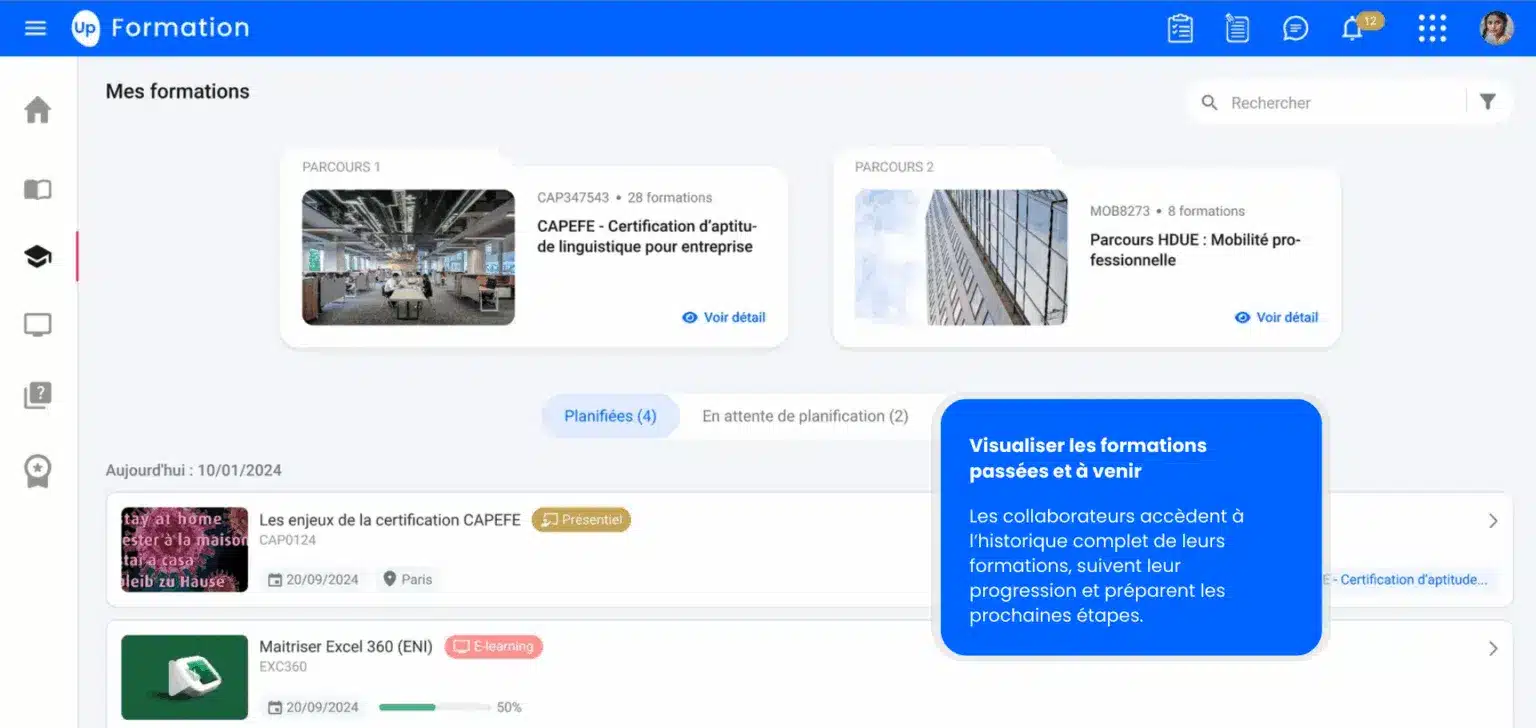
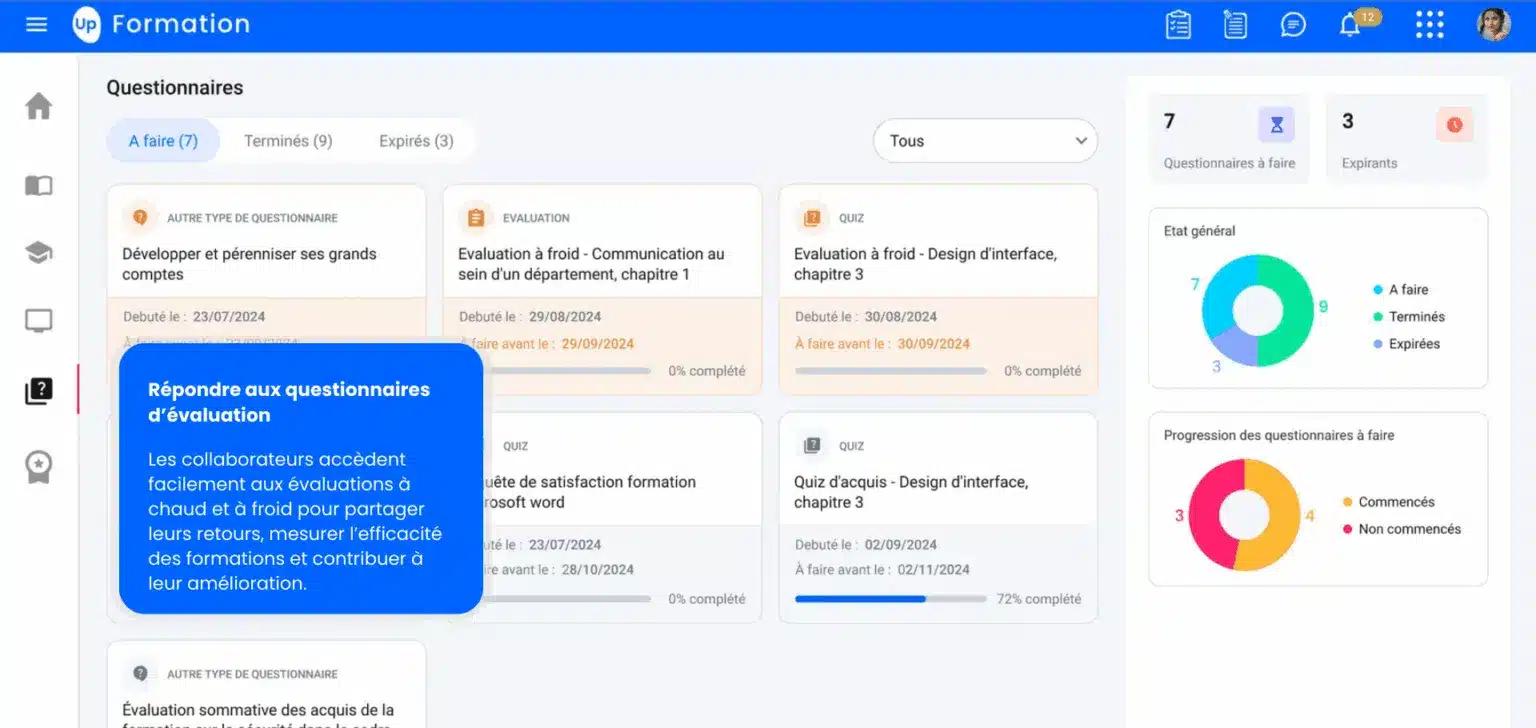
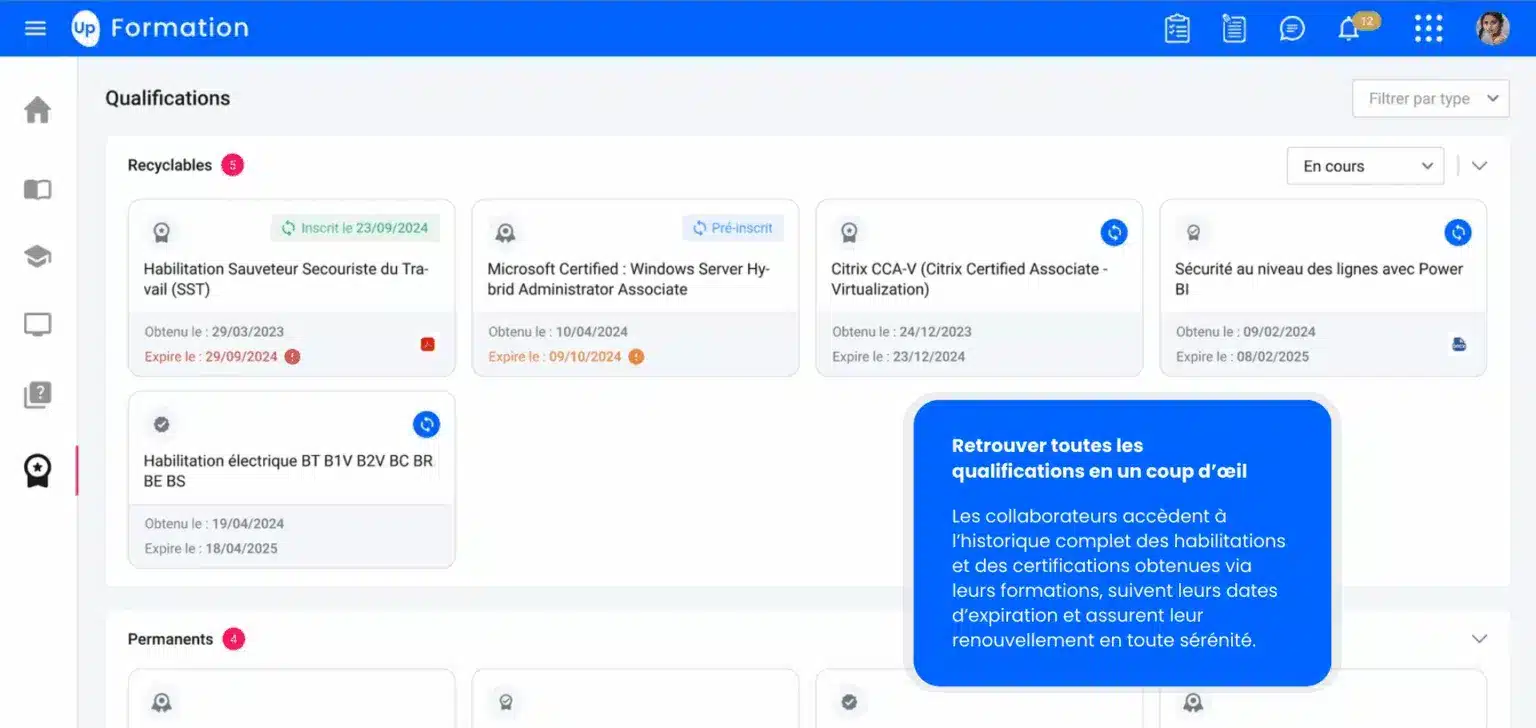
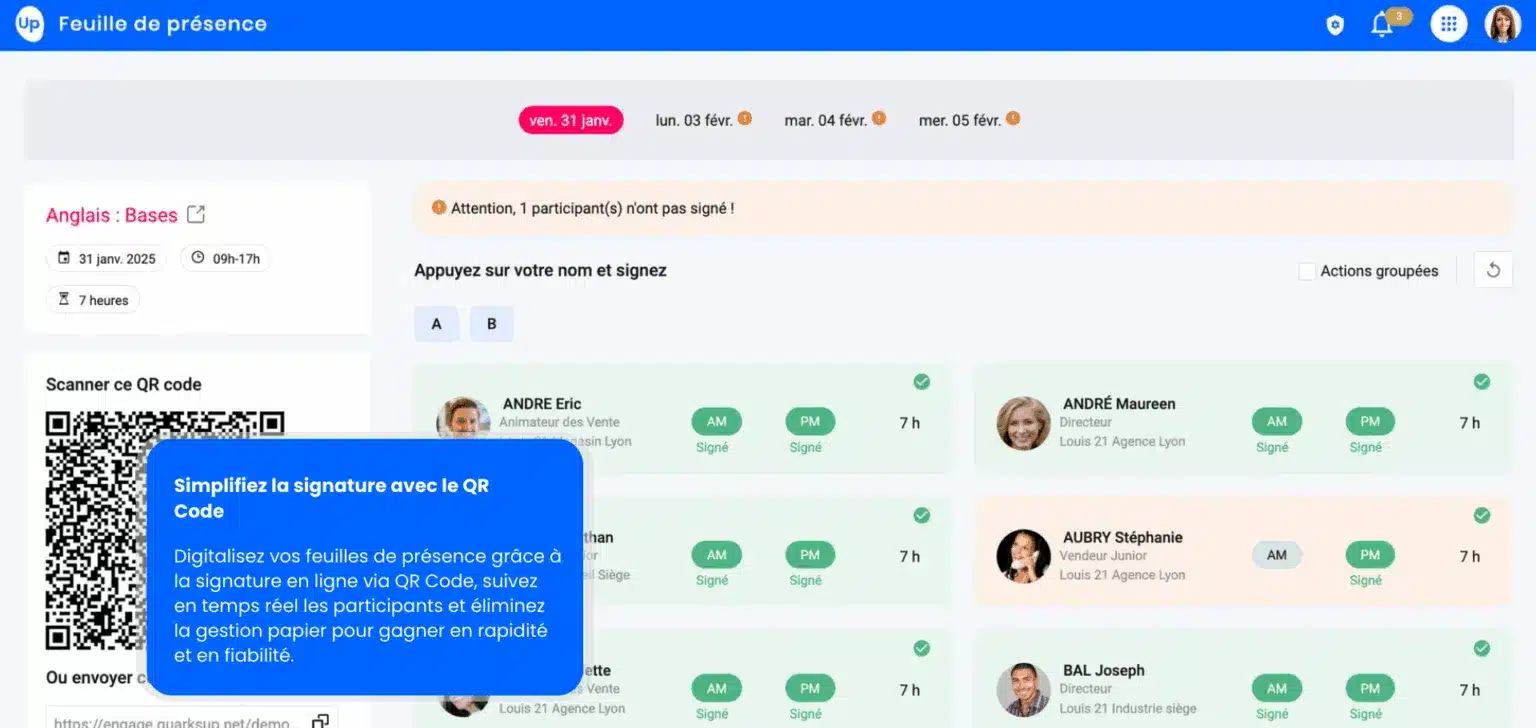








An LMS, or Learning Management System, is a digital platform dedicated to managing and delivering online training. It is a centralized location where companies and trainers can create, manage, and track courses, learning modules, and educational resources. Learners can access it, track their progress, and interact with the content. An LMS platform facilitates distance learning, continuing education, and collaboration, while offering flexibility and accessibility.
An LMS platform works by hosting and organizing online courses. Content creators add modules, videos, and resources. Learners access them, take courses, submit exercises, and interact via forums. The system records progress and performance for effective monitoring.
Using an LMS platform offers multiple advantages, starting with flexibility. Learners can take courses at their own pace, wherever they are. In addition, it centralizes educational content, making it easier to access and update. Interactive features, such as quizzes and forums, encourage learner engagement. Trainers can track progress and adapt courses accordingly.
In other words, using an LMS platform reduces the costs associated with traditional training, such as travel. It promotes continuous learning and professional development, which are essential in a constantly changing world. In short, an LMS platform offers an effective and modern solution for continuing education.
An LMS (Learning Management System) and an LCMS (Learning Content Management System) are both learning management tools, but with key differences. An LMS focuses on delivering, managing, and tracking online courses for learners. In contrast, an LCMS emphasizes the creation, management, and reuse of educational content. While the LMS manages learner-content interactions, the LCMS focuses on the creation of educational content, enabling trainers to develop reusable and adaptable learning modules.