







Which HRIS software should you choose to truly transform your HR management? With so many options available, it's easy to get lost between marketing promises and your company's real needs. This 2026 comparison of the best HRIS software helps you identify the solution that's right for your situation, not just the most well-known one.
In summary:
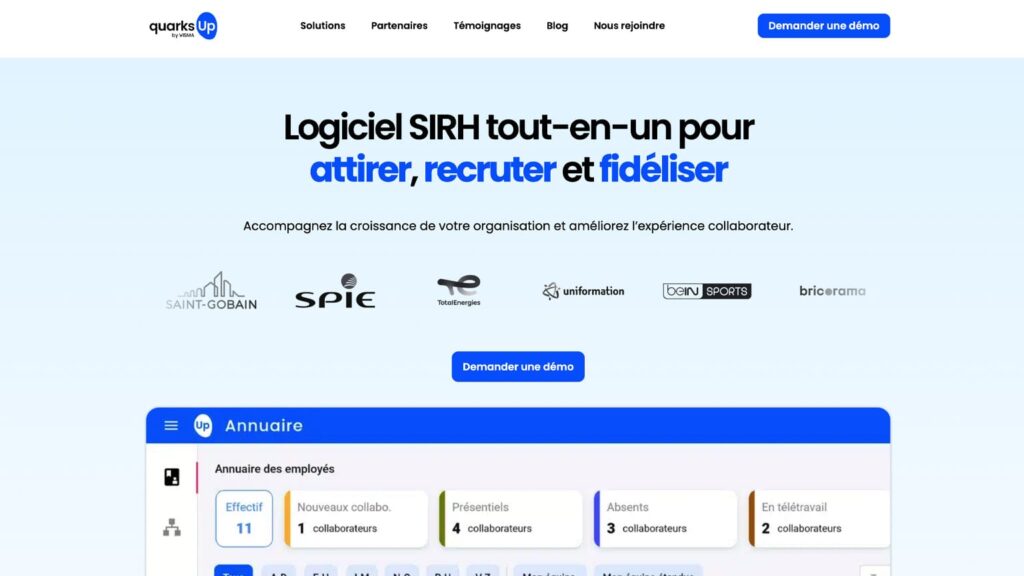
quarksUp is a comprehensive and modular HRIS software solution designed to help small and medium-sized businesses and mid-market companies organize, professionalize, and manage their HR functions.
Unlike many tools that digitize silos (recruitment, leave, interviews, etc.), quarksUp takes a horizontal approach to the employee journey.
HR processes are designed as a continuous flow, from recruitment to skills management, including performance, compensation, and HR management, in order to ensure consistency, clarity, and continuity of data.
The platform covers the main HR functional blocks:
This approach allows HR teams to move away from a purely administrative mindset and refocus on high-value tasks: structuring employee career paths, ensuring the reliability of HR data, supporting managers, and aligning with business challenges.
Strengths of quarksUp
Points to watch out for
quarksUp is designed for companies looking for a structured HRIS that can support their growth and professionalize their HR function in the long term.
→ Discover why quarksUp is #1 in a demo
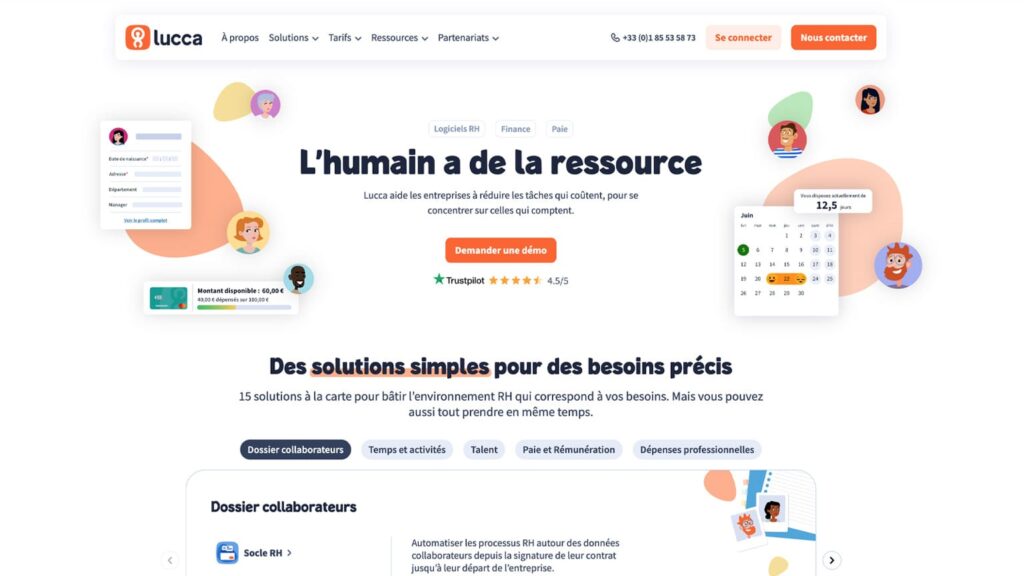
Lucca is a well-established player in the French HRIS market, particularly renowned for its specialized tools for managing time, leave, and expense reports. The solution consists of a suite of interconnected software applications, each designed to address a specific need.
Lucca stands out for its excellent user experience and rapid adoption by employees, particularly for everyday use. The platform is well suited to companies seeking to gradually digitize their HR processes.
However, the approach remains functional by module, with a focus on specialization rather than overall management of the employee journey.
Strengths
Weaknesses
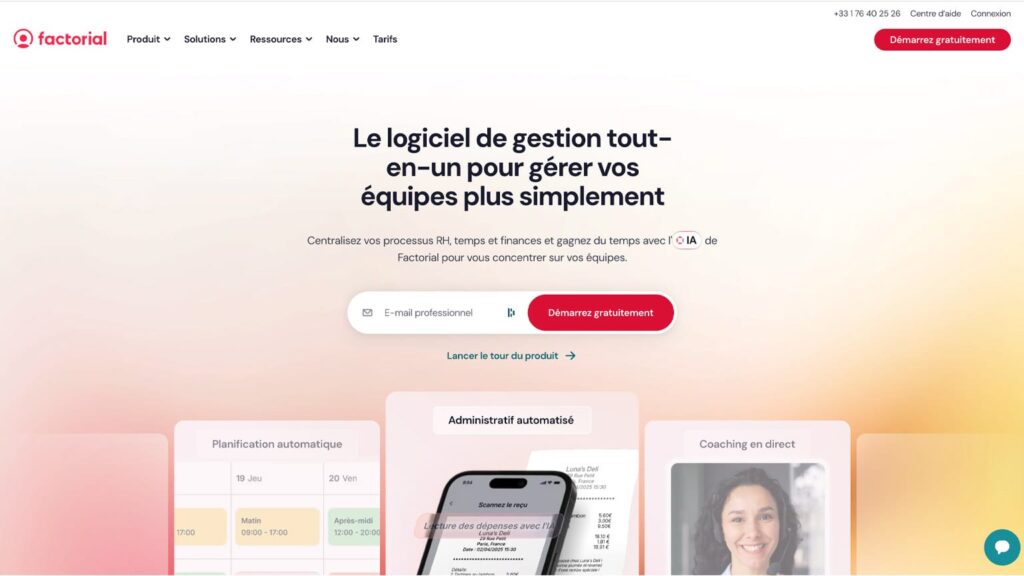
Factorial is primarily aimed at small and medium-sized businesses looking foran HRIS thatis easy to implement and covers essential HR needs: time off, employee files, performance reviews, and HR documents.
The platform focuses on a seamless experience and rapid time-to-value, making it an attractive solution for organizations with limited resources or those in the early stages of HR structuring.
However, as soon as requirements become more complex (multi-entity, advanced management, extensive HR processes), the solution may show certain limitations.
Key features of Factorial
Weaknesses
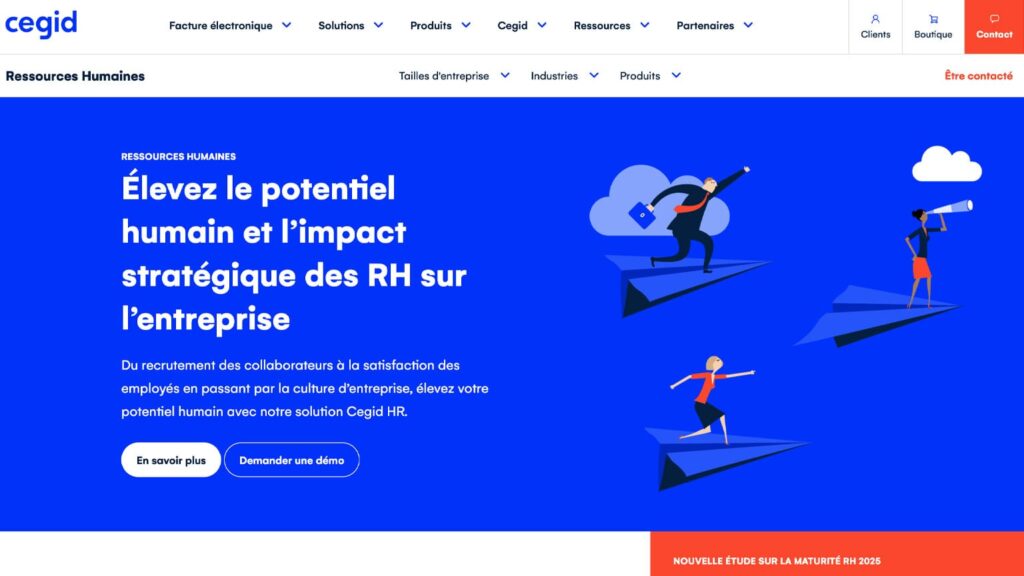
Cegid HR (formerly Talentsoft) is primarily designed for large organizations (mid-sized companies and large corporations), offering broad functional coverage that includes payroll, personnel administration, and advanced HR management features.
The solution enjoys a strong reputation and a proven track record of reliability in complex, highly regulated environments, thanks in particular to its ability to manage large-scale HR projects, including those spanning multiple countries. This strength stems both from the software vendor itself and from a broad network of integration partners with extensive experience in complex deployments.
However, the user experience and functional consistency are still being consolidated, as the suite is the result of several external growth operations. This functional richness is therefore often accompanied by long and structuring projects, with a sometimes less fluid experience for managers and employees compared to more recent solutions designed natively for agility.
Cegid HR is therefore particularly well-suited for highly structured organizations with significant project resources, whereas other solutions (such as quarksUp) are better suited for large SMEs and small mid-market companies looking to structure their HR functions while maintaining agility and rapid deployment.
Key strengths of Cegid HR
Weaknesses
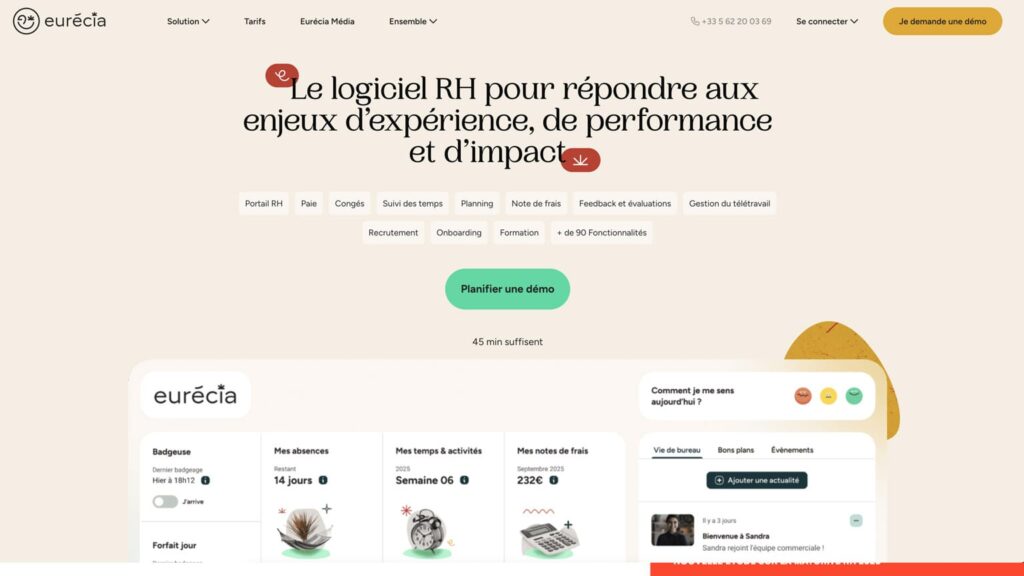
Eurécia offers a modular HRIS suite that addresses the standard needs of small and medium-sized businesses: leave, time tracking, performance reviews, HR files, expense reports, and dedicated workplace well-being solutions.
The solution stands out for its ease of use and accessible positioning, well suited to organizations wishing to professionalize their practices without complicating their processes.
However, the platform remains more focused on day-to-day operational HR management than on strategic oversight.
Eurécia's strengths
Weaknesses
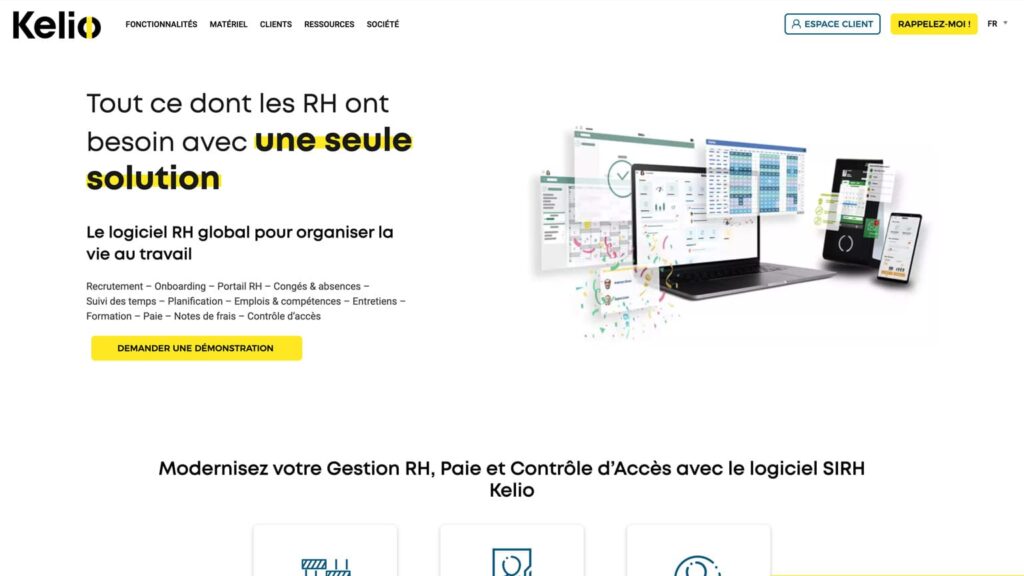
Kelio is historically recognized for its time management, scheduling, and payroll solutions, often coupled with hardware devices (time clocks).
The solution is robust in these areas and is well-suited for industrial or multi-site organizations.
On the other hand, the approach is heavily focused on time management, compliance, and administration, with more limited coverage of the employee journey and overall HR experience.
Key features of Kelio
Weaknesses
Sigma HR offers a comprehensive platform, often deployed in large organizations with specific and complex needs.
The solution offers a high degree of customization and comprehensive coverage of HR functions.
However, this functional richness often comes with structural projects involving significant delays and investments, which are not well suited to SMEs or mid-sized companies seeking rapid and agile implementation.
Strengths of Sigma HR
Weaknesses
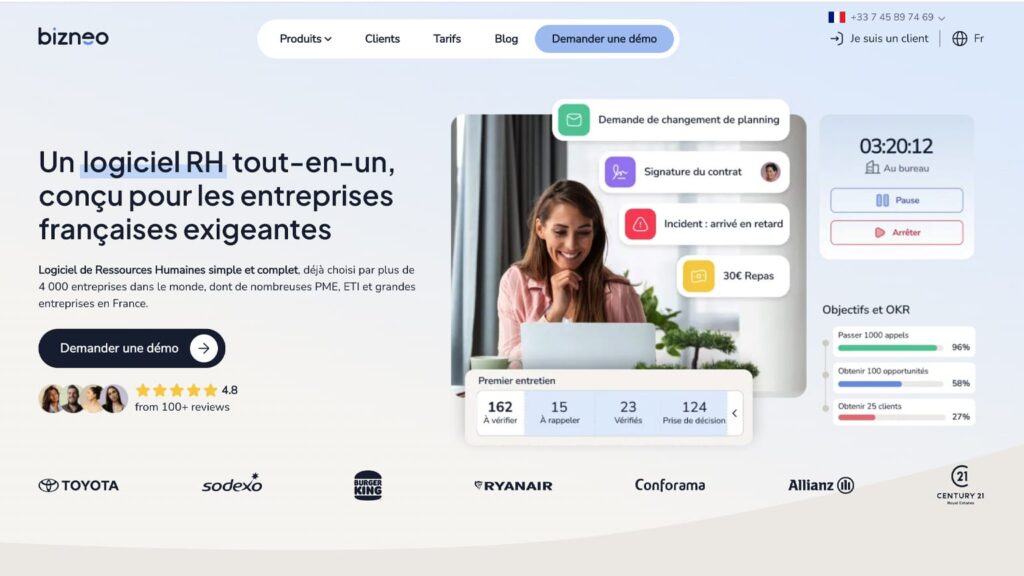
Bizneo HR is particularly renowned for its ATS and recruitment management features, complemented by more traditional HR modules.
This solution is well-suited for companies facing significant recruitment challenges and looking to centralize this process.
However, coverage of the employee journey as a whole remains less consistent.
Key features of Bizneo
Weaknesses
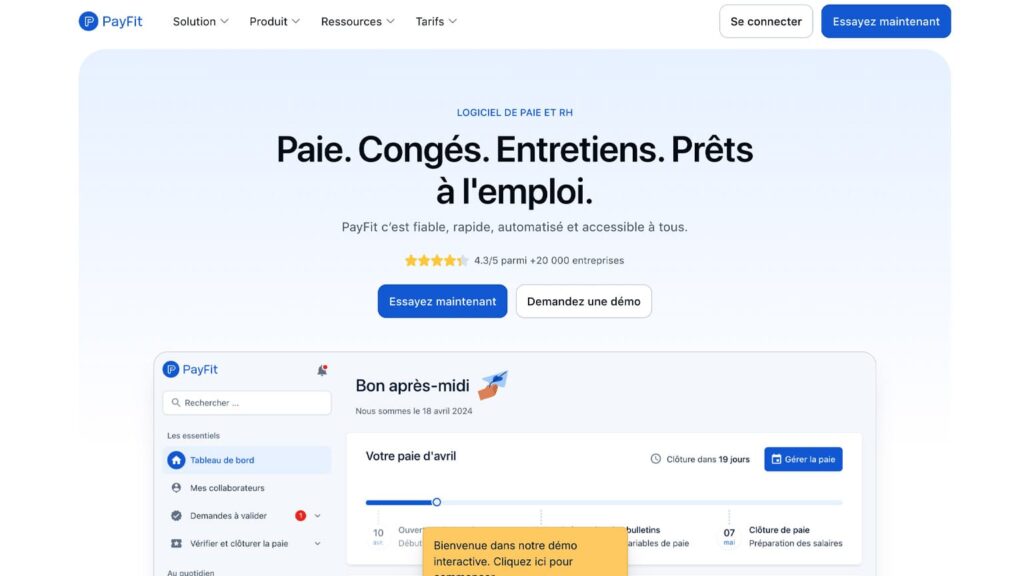
Payfit is primarily a payroll solution, enhanced with basic HR features.
It is primarily aimed at SMEs seeking simple and effective payroll automation.
However, Payfit cannot be considered a complete HRIS, particularly for organizations wishing to structure their HR processes.
Key features of Payfit
Weaknesses
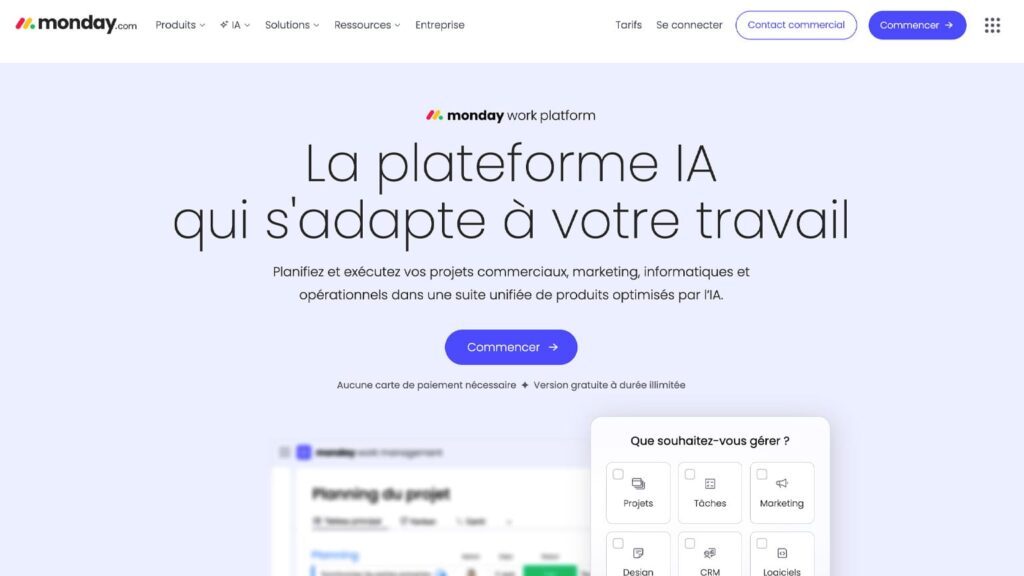
Monday.com is not an HRIS per se, but a collaborative work management tool sometimes used to structure certain HR processes (task tracking, simple onboarding, action planning).
While it can address specific organizational needs, it does not meet the regulatory, functional, and business requirements of a true HRIS, particularly in terms of compliance, HR administrative management, and structured oversight.
Highlights of Monday.com
Weaknesses
| HRIS software | Primary target | -functional cover | Modularity | Scalability |
|---|---|---|---|---|
| 🥇 quarksUp | SMEs / mid-sized companies | Complete - integrated employee cycle | Yes - modules can be activated | High - designed for HR management and growth |
| 🥈 Lucca | SMEs / mid-sized companies | Bonne - comprehensive HR modules (leave, time, expense reports, onboarding) | Yes - groupable features | Medium to high - suitable for SMEs/mid-sized companies |
| 🥉 Factorial | SMEs / mid-sized companies | Large - admin, time, payroll, talent, onboarding | Yes - pricing and à la carte modules | Good - suitable for growing SMEs |
| Cegid HR | SMEs / Mid-sized companies / Large accounts | Very broad - Integrated HR & payroll | Yes - large functional base | High - designed for complex organizations |
| Eurécia | SMEs / mid-sized companies | Large - vacations, absences, scheduling, interviews, payroll | Yes - custom modules | Medium to high - flexible depending on configuration |
| Kelio | SMEs/mid-sized companies (multi-site) | Very broad - HR, payroll, time, GTA | Yes - modules & extensions | Medium to high - depending on scope |
| Sigma HR | ETI / Key accounts | Large & customizable (powerful configuration) | Yes - high level of customization | High - suitable for complex structures |
| Bizneo HR | SME / Mid-cap / International | Large - multiple HR modules | Yes - configurable modules | Elevated - modular architecture |
| PayFit | Small businesses / SMEs | Average - payroll + basic HR functions | Yes - flexible offer | Average - limited growth outside of payroll/basic HR |
| Monday.com | All sizes (generic tool) | Low to partial - non-dedicated HR modules | Yes - adaptable with templates | Average - depends on integrations |
HRIS (Human Resources Information System) software is a platform that centralizes, organizes, and automates all of a company’s HR processes. In practical terms, it enables the management of employee data, streamlines administrative processes, and helps steer the HR function using actionable metrics.
A modern HRIS generally covers four main functional areas:
Whereas older tools were limited to "storing information," today's HRIS systems enable HR data to be interpreted and used to support managerial decisions.
Choosing the best HRIS software does not depend on a generic ranking, but on how well the tool fits your actual situation. Here are the key criteria to analyze before making a decision.
Before making any comparisons, clarify your scope:
Clear framing avoids overly complex projects or undersized tools.
HR needs are changing rapidly, especially in SMEs and mid-sized companies.
A modular HRIS allows you to activate the right modules at the right time, without having to change tools every two years. This is a key criterion for supporting growth, reorganizations, or multi-entity structuring.
An HRIS that is not used is a useless HRIS. Interface, navigation logic, manager autonomy: ease of use directly influences adoption, and therefore the real value of the tool.
It must integrate easily with:
Without reliable connectors, data remains fragmented and management biased.
The success of an HRIS project depends as much on the tool itself as on its deployment.
Methodology, change management, post-deployment support:
these are often the elements that make the difference between an HRIS that is "installed" and one that is actually used.
Still unsure which solution to choose?
Want to compare offers based on your business challenges, budget, and organization? Request a personalized demo of quarksUp and identify the HRIS that best suits your company.
Depending on the size of your company and your HR priorities, certain tools may be more suitable. Check out our rankings of the best specialized software for each area of human resources:
Because it combines functional depth, modularity, and multi-entity management without the complexity of large enterprise solutions or the limitations of SME tools.
A solution capable of consolidating data, orchestrating end-to-end processes, and supporting managers, without complicating usage.
By analyzing concrete criteria: actual coverage, modularity, integration capacity, HR management, and quality of support, not just the number of features displayed.