









In everyday language, we often talk about "interviews" to refer to different situations: the professional interview in the legal sense (mandatory and focused on career paths and skills),the annual performance review (focused on performance and objectives), but also follow-up meetings or interim interviews. Interview management software covers all of these formats. It has become a key tool for HR departments seeking to fulfill their legal obligations, harmonize management practices, and transform interviews into a powerful HR management tool.
In many mid-sized companies, interviews are still managed using Excel or shared Word documents. The result: incomplete campaigns, insufficient traceability, and unused data. Dedicated software allows you to structure campaigns (professional, annual, and follow-up interviews), centralize exchanges, and link conclusions to other HR components: training, skills, and mobility. However, this requires choosing a tool that is truly suited to your HR maturity.
In summary:
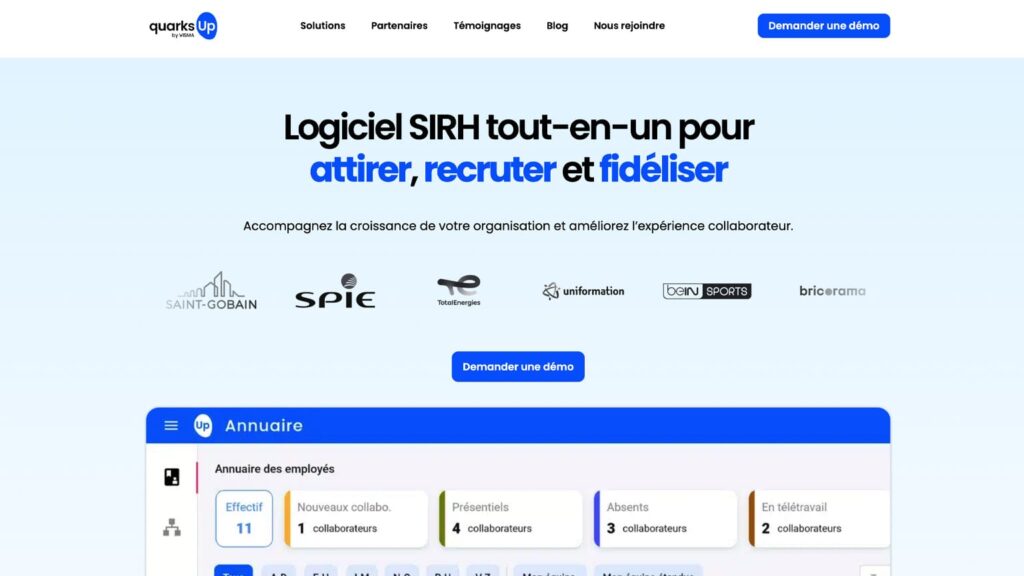
quarksUp offers an Interviews & Careers module that is fully integrated into a comprehensive HRIS platform designed to structure the entire employee journey. Unlike many specialized software programs that isolate interviews, quarksUp places them within a continuous process linking performance, skills, training, and internal mobility.
Interview campaigns are fully customizable (professional, annual, objective interviews), with guided preparation for employees, a dedicated space for managers, and a complete history of exchanges. HR teams thus have access to actionable feedback: campaign tracking, completion rates, identified skills, training or development needs.
In growing organizations, this approach transforms interviews into powerful HR management tools, rather than mere regulatory obligations.
👍 Strength: comprehensive view of interviews, linked to other HR modules
👎 Point to note: requires initial framing to fully leverage the skills/training links
→ Discover the HRIS Interviews & Careers module
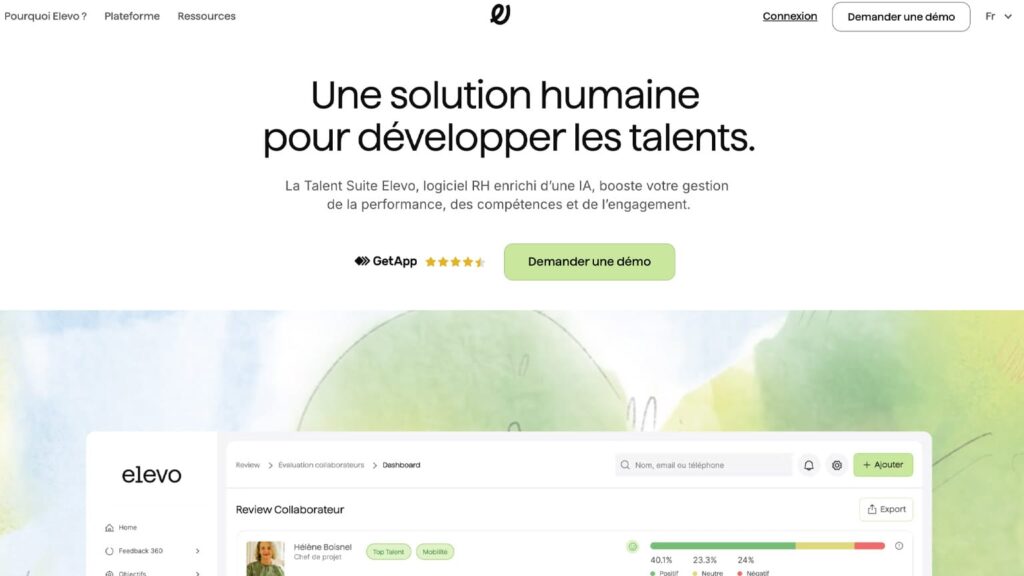
Elevo has historically focused on individual performance, continuous feedback, and structuring interviews. The solution is particularly appreciated for its ease of use and rapid adoption by managers and employees, especially in organizations with limited resources or undergoing managerial restructuring.
Elevo enables you to effectively manage annual and professional review campaigns, align individual and collective objectives, and formalize concrete action plans. In practice, it is often used as a tool for facilitating performance and managerial dialogue. However, the tool remains more performance-oriented than structured HR management.
👍 Strength: excellent managerial adoption
👎 Weakness: HRIS integration must be anticipated to avoid data isolation
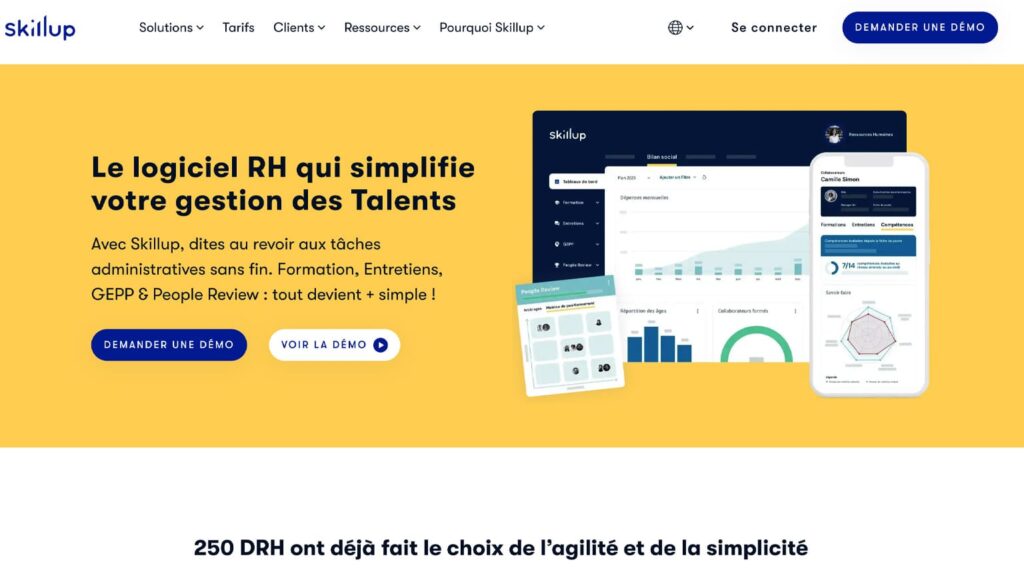
Skillup positions professional interviews as a key lever for skills management and training. Unlike tools that focus solely on managerial exchanges, Skillup clearly structures interview campaigns around skills frameworks, skills development needs, and regulatory requirements.
In practice, interviews become a starting point for individual and collective development plans, facilitating alignment between employee expectations, business needs, and HR strategy. This approach is particularly relevant for mid-sized companies or organizations undergoing advanced restructuring, where skills management becomes strategic.
👍 Strength: strong consistency between interviews, skills, and training
👎 Weakness: less suitable for organizations looking for a simple tool that can be deployed very quickly
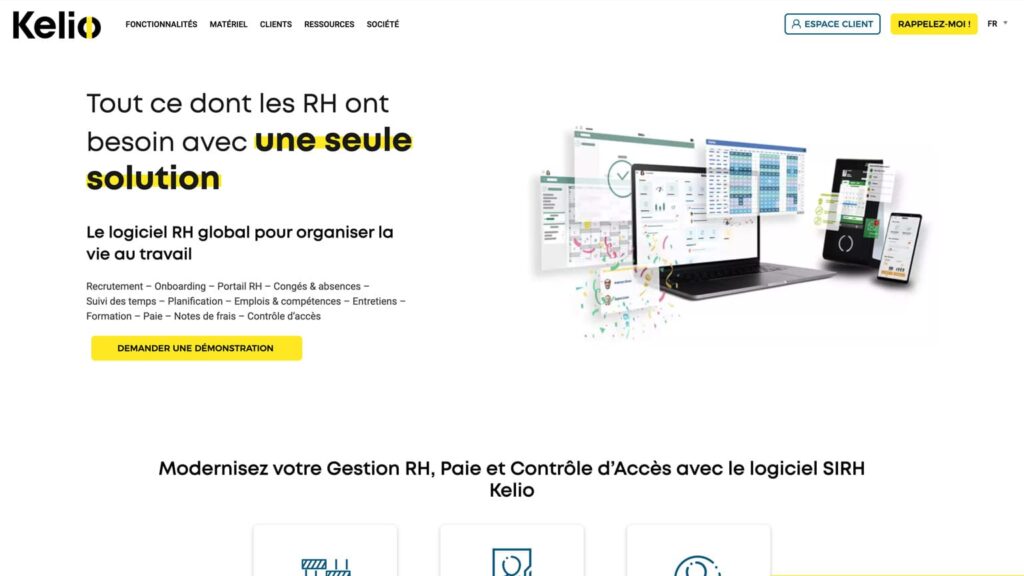
Kelio offers a performance review management module integrated into an HRIS suite with a long-standing reputation for time and activity management (TAM) and payroll. Professional and annual reviews are managed here with a focus on compliance, traceability, and data reliability, which is particularly valuable in multi-site, industrial, or highly regulated environments.
The tool helps structure campaigns, keep a record of communications, and ensure compliance with legal obligations. Many mid-sized companies choose Kelio for its robustness and ability to integrate with existing HR processes.
👍 Strength: robustness and regulatory compliance
👎 Weakness: user experience is more administrative than collaborative
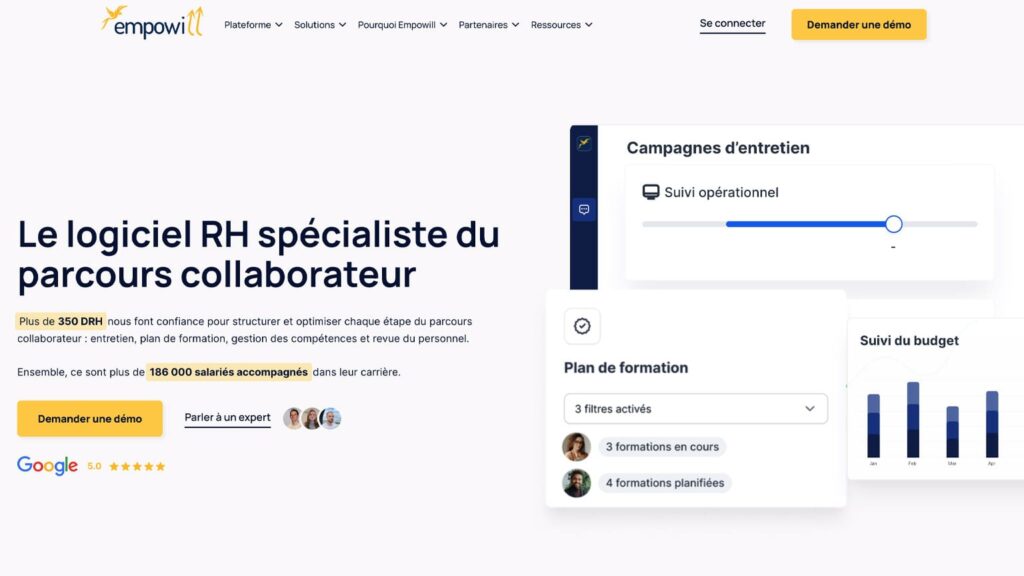
Empowill positions itself as a talent management solution, with a strong focus on skills, career paths, and sustainable performance. Professional and annual reviews are designed to aid HR decision-making, identifying potential, structuring career paths, and aligning skills with business challenges.
The tool provides a consolidated view of individual and collective skills, which is particularly useful for mid-sized companies engaged in forward-looking job and skills management. In practice, Empowill is most valuable when integrated into a structured HR approach and already formalized processes.
👍 Strength: skills and career path overview
👎 Weakness: requires a certain level of HR maturity to be fully exploited
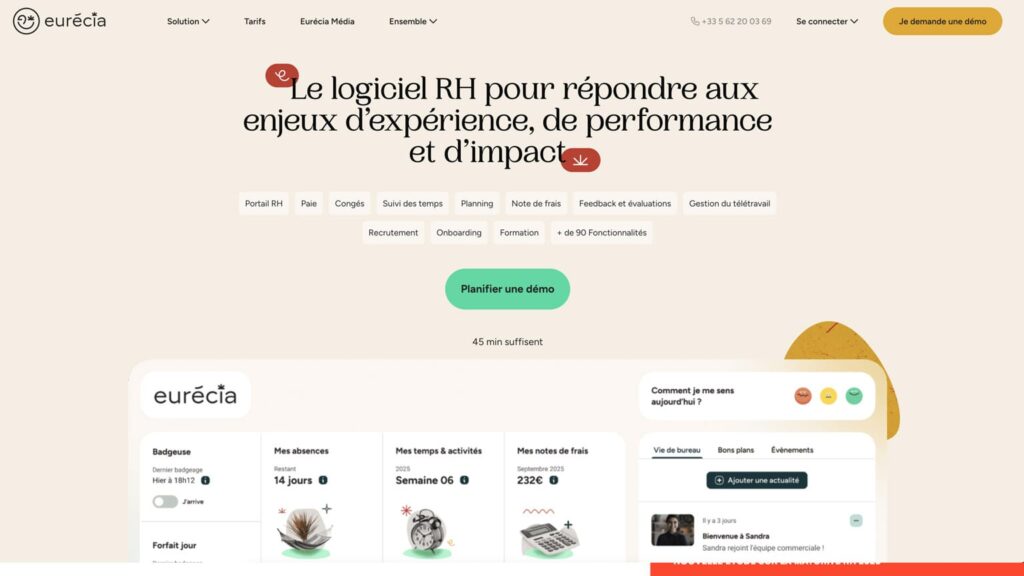
Eurécia offers a professional and annual interview module designed for SMEs looking for a simple and quickly operational solution. The tool allows you to structure interview campaigns, distribute customizable templates, collect responses from employees and managers, and store the history in a centralized location.
Eurécia's approach focuses on ease of use and rapid implementation, without complex configuration. This makes it a suitable solution for organizations wishing to secure their legal obligations and standardize their management practices.
👍 Strength: simplicity and accessibility
👎 Weakness: limited advanced HR management and multi-process consolidation for mid-sized companies
| Software | Target | HRIS integration | HR management | Positioning |
|---|---|---|---|---|
| 🥇 quarksUp | ETI | Native | High | Employee journey |
| 🥈 Elevo | SMEs / mid-sized companies | Connectors | Average | Performance |
| 🥉 Skillup | SMEs / mid-sized companies | Partial | High | Skills |
| Kelio | SMEs / Mid-sized companies / Large corporations | Native | Average | Compliance |
| Empowill | Small businesses / SMEs / Mid-sized companies | Partial | High | Talents |
| Eurécia | Small businesses / SMEs | Native | Low to medium | Operational HR |
According to several sector studies on HRIS projects in SMEs and mid-sized companies (such as Xerfi, market analyses 2025), interview management is one of the most frequently under-resourced processes, despite strong regulatory requirements.
Professional interviews are mandatory every two years, with a review after six years, in accordance with the legal framework in force. In many medium-sized companies, this obligation is still handled manually, posing a real risk in the event of an audit or dispute.
See also: Why integrate HRIS software for performance reviews?
In the event of repeated failure to comply with the obligation to provide professional interviews, the company is liable to financial penalties and an increased risk of labor court disputes, particularly in the event of contract termination.
Excel and Word do not allow for reliable traceability or consolidation. In many projects, HR departments discover too late that the data cannot be used for training or workforce planning.
Each type of interview serves a different purpose. A good tool allows you to adapt the templates without multiplying the number of files.
Self-assessment, feedback, goal setting: the quality of the interview depends largely on this preliminary phase.
Automatic reminders, progress tracking, closure: these are the features that truly secure campaigns.
Contrary to popular belief, a high interview completion rate is not an indicator of success if the data collected does not lead to any concrete HR action (training, mobility, skills development).
An interview should never be a one-off event. It must be linked to the employee file and connected to the training, skills, and mobility modules to ensure consistent follow-up over time. Without integration with comprehensive HRIS software, commitments made remain declarative and difficult to manage.
Selection criteria
Beyond marketing rhetoric, certain criteria really make a difference in the long term. According to several market analyses of HRIS projects in SMEs and mid-sized companies, more than 60% of HR projects that are considered disappointing are so because of a poor alignment between the chosen tool and managerial practices, rather than a lack of functionality.
The key criteria to analyze are:
In many mid-sized companies, HR departments underestimate the impact of ergonomics and ease of use on the effective conduct of interviews, even though this is one of the main factors contributing to failure in the field.
Professional interview management software should never operate in isolation. Sector studies on HR digitization show that the value of interviews is greatly diminished when they are not linked to other HR processes.
A tool that is truly integrated with the HRIS enables:
Conversely, a standalone tool requires information to be re-entered, weakens data security, and prevents cross-functional management. Using multiple tools is often a mistake: it complicates HR management and drastically reduces the value of interviews.
In many organizations, interviews are conducted effectively but do not result in any structured action due to a lack of connection with training, mobility, or strategic workforce planning.
Analyses of HRIS projects show that the lack of interoperability is one of the main reasons why projects have little business impact, despite a decent completion rate.
When it comes to professional interview projects, technology alone is not enough. Feedback from the field indicates that the quality of the initial setup and support explains much of the difference in success between two similar projects.
In practice, the most effective projects are based on:
HR departments often tend to think that the tool will suffice on its own. However, studies show that HR projects that lack support generate partial adoption and a low return on investment, even with good software.
Want to structure your interviews without having to use multiple tools?
→ Discover how quarksUp transforms interviews into an HR management tool.
The professional interview focuses on development and skills and is mandatory; the annual interview assesses performance and is optional.
Via connectors or by choosing a native module integrated into the HRIS.
Pricing generally ranges from a few euros per employee per month for a basic module to higher costs when the tool is integrated with the HRIS and linked to skills management.
Most solutions cover mandatory professional interviews, annual performance reviews, and follow-up points or interim interviews. The challenge is to centralize these different formats in a single tool to avoid data dispersion and secure HR management.
Human resources management often relies on a variety of specialized tools. Discover other HR software solutions designed to meet a range of needs