










Leave and absence management is often one of the first HR processes to become more complex as a company grows. Leave and absence management software allows you to centralize requests, ensure reliable entitlement calculations, and provide visibility to both HR teams and managers.
In 2026, these tools will no longer be limited to paid leave: they will cover all absences (RTT, sick leave, exceptional events) and will be integrated into the HRIS and payroll systems to secure data.
Here is our comparison of the most relevant solutions for SMEs and mid-sized companies.
In summary:
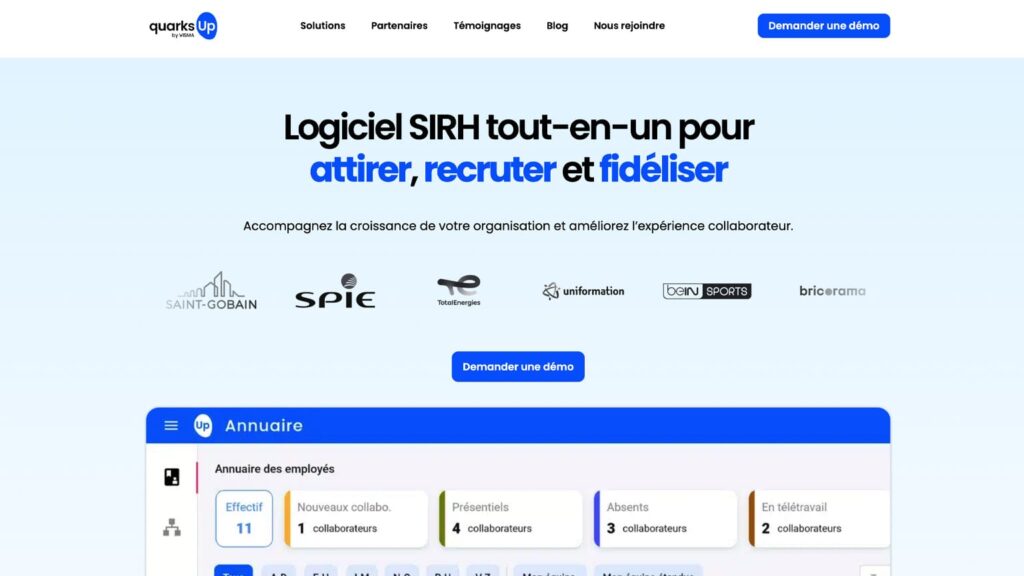
Designed for mid-sized companies, quarksUp treats leave and absence management as a fundamental part of HR management, while remaining extremely easy to use for employees. The tool allows you to manage all types of absence (paid leave, RTT, sick leave, exceptional absences) in a single framework, with clear and shared rules.
Requests are centralized, approvals are automated, and balances are updated in real time, while remaining aligned with legal and internal rules. For managers, viewing team availability provides an immediate overview of attendance and absences, facilitating work organization and workload forecasting.
Native integration with the rest of the HRIS ensures reliable data that can be used directly by payroll, managers, and HR teams. The modular approach allows for gradual deployment without unnecessary complexity.
👍 Strength: easy for employees to adopt and clear overview of team availability
👎 Weakness: less suited to very small, single-process organizations
→ Discover the Absence Management module from quarksUp in demo mode
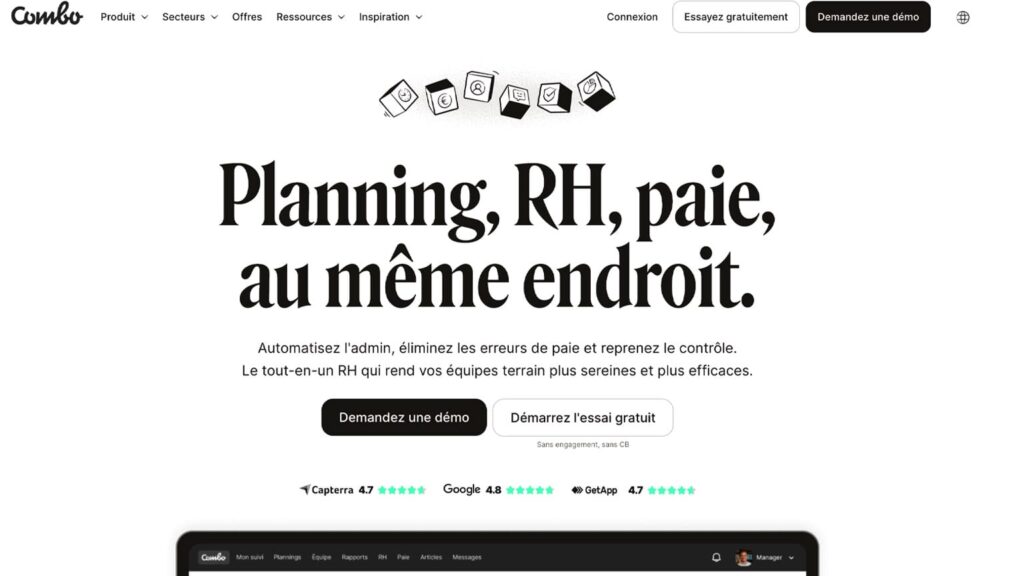
ComboHR offers a leave and absence management module integrated into an SME-oriented HRIS. The tool centralizes requests, automates approval workflows, and provides managers with clear visibility via shared schedules.
It covers the main types of absences and facilitates communication between employees, managers, and HR. However, complex or highly specific rules may require additional configuration. The solution is particularly suited to companies looking for a tool that is quick and easy to deploy.
👍 Strength: Ease of use and rapid deployment
👎 Weakness: Limited functional depth for complex rules
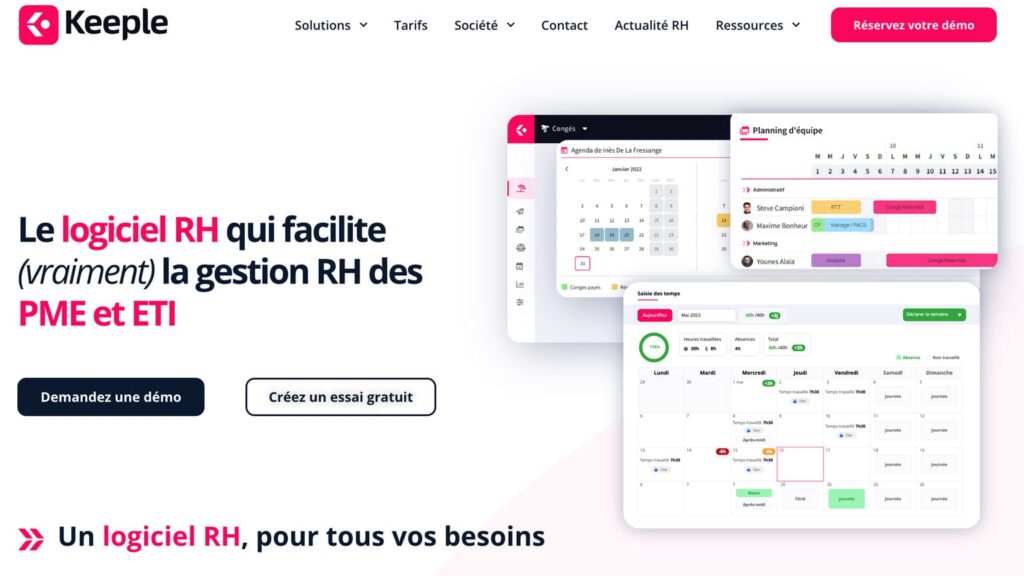
Keeple specializes in leave and absence management, with an approach focused on user-friendliness and autonomy. Employees enter their requests, managers approve them, and HR has a consolidated overview.
The tool manages different types of absences and provides clear schedules by team or department. However, Keeple deliberately remains focused on this scope: for broader HR management or advanced integration with other modules, additional tools are required.
👍 Strength: specialization and smooth user experience
👎 Weakness: scope limited to absence tracking
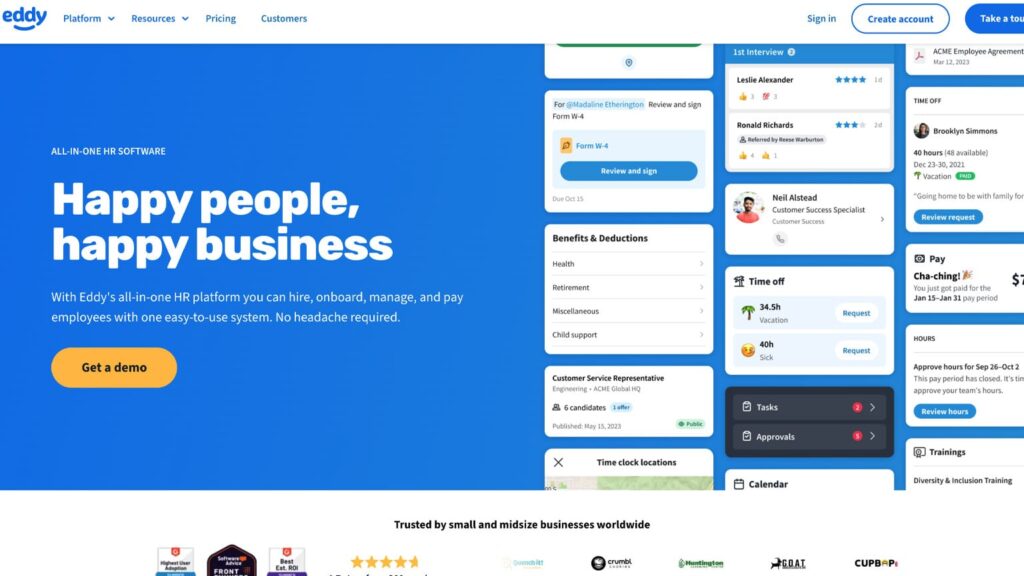
Eddy integrates leave and absence management into an HRIS designed to structure HR processes for SMEs. The module allows you to manage leave requests, hierarchical approvals, and balance tracking based on simple and understandable rules. Managers have clear absence schedules to anticipate team organization, while HR benefits from a consolidated view.
The solution is well suited to companies wishing to centralize their HR fundamentals in a single tool. However, when absence rules become complex or highly specific, the configuration options may show certain limitations.
👍 Strength: consistent and clear HR database
👎 Weakness: more limited advanced configuration of absence rules

Malibou offers a simple and accessible solution for managing leave and absences, designed to facilitate adoption by employees and managers. Requests are entered in just a few clicks, approvals are seamless, and balances are visible in real time, limiting back-and-forth communication with HR teams.
The tool provides a clear overview of upcoming absences thanks to clear calendar views by team. It is particularly suitable for SMEs looking for a quick-to-deploy solution to structure their practices. However, Malibou shows its limitations as soon as absence rules become complex or require more advanced HR integration.
👍 Strength: easy to use and quick to learn
👎 Weakness: limited advanced features and integrations
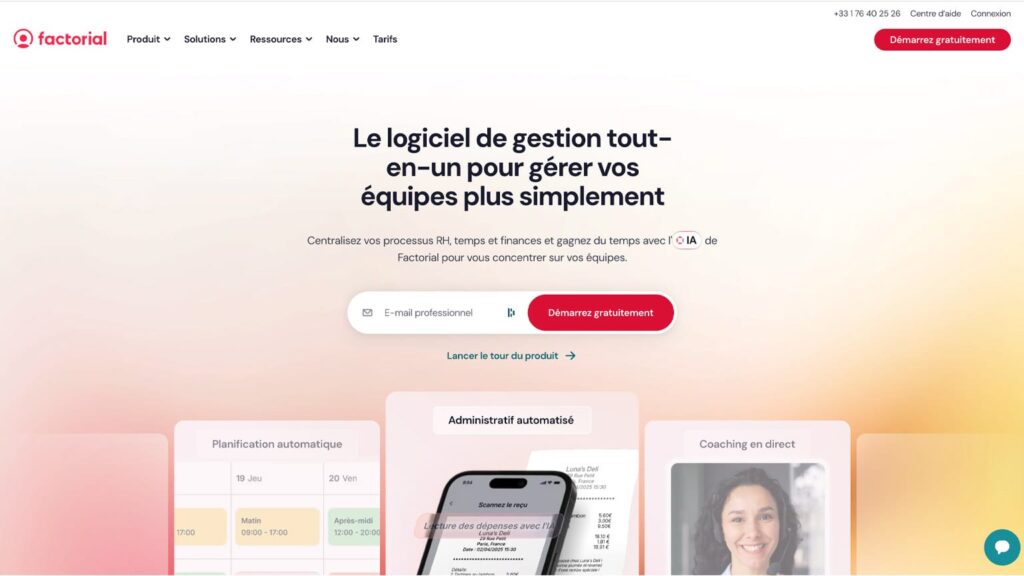
Factorial offers a leave and absence management module integrated into a comprehensive HR suite, which also covers time tracking, administrative management, and payroll in certain countries. Employees enter their requests independently, managers quickly approve them, and balances are updated in real time.
The tool is particularly appreciated for its modern interface and ease of use, which encourages adoption in the field. However, some companies may encounter limitations in terms of fine-tuning absence rules or adapting to very specific organizational contexts.
👍 Strength: ergonomics and quick adoption
👎 Weakness: flexibility sometimes limited on complex rules
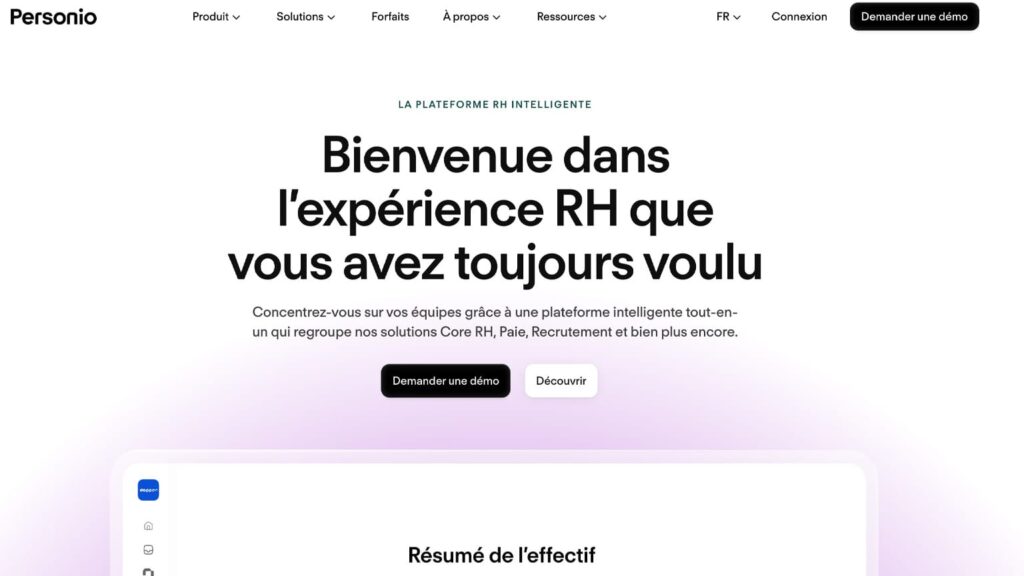
Personio integrates leave and absence management into a comprehensive HRIS suite, primarily designed for highly structured companies. The module allows you to manage different types of absences, automate approval workflows, and synchronize data with payroll.
The wealth of features provides a robust framework for multi-team or multi-site organizations. On the other hand, deployment requires precise planning and appropriate support. For some SMEs, the complexity of the tool and the associated costs may be a barrier to adoption.
👍 Strength: extensive functional coverage
👎 Weakness: greater complexity and deployment effort
| Software | Target companies | Scope | Strengths | Weaknesses | Rates |
|---|---|---|---|---|---|
| 🥇 quarksUp | ETI | Vacation, RTT, absences, HRIS & payroll integration | Unified view of leave/absences integrated into HR management | Less suitable for very simple structures | Based on estimate |
| 🥈HR Combo | SME | Vacation and common absences | Ease of use, rapid deployment | Limited configuration for complex rules | Based on estimate |
| 🥉 Keeple | SME | Vacation, RTT, absences | Leave and absence specialist, smooth UX | Deliberately limited HR scope | Based on estimate |
| Eddy | SME | Leave and absences integrated into the HRIS | Consistent HR foundation, clear schedules | More limited advanced settings | Based on estimate |
| Malibu | SME | Vacation and simple absences | Quick start, team readability | Not well suited to complex or multi-site rules | Based on estimate |
| Factorial | SMEs & mid-sized companies | Vacation, absences, time | Modern interface, broad HR ecosystem | Flexibility sometimes limited in specific cases | Subscription (based on number of employees) |
| Personio | Structured mid-sized companies and SMEs | Vacation, absences, advanced workflows | Full functional coverage | Complexity and costs for small organizations | Based on estimate |
Leave management software centralizes all requests and replaces informal channels (emails, Excel) with clear, configurable, and traceable processes. Validation rules can be adapted to the organization (direct manager, HR, multi-level), which secures the process without making it rigid.
In SMEs and mid-sized companies, this structuring is key: studies show that the proliferation of manual exchanges remains one of the primary sources of HR errors and wasted time.
Automatic calculation of vacation entitlements and continuous updates ensure compliance with legal requirements, internal agreements, and individual circumstances. Employees have access to reliable, up-to-date information, reducing misunderstandings and HR inquiries.
With rules becoming increasingly complex (reduced working hours, part-time work, specific absences), the reliability of balances is becoming a critical issue, particularly in terms of securing payroll and social security obligations.
A single tool allows you to manage all absences consistently: paid leave, RTT(reduced working time), sick leave, exceptional or disciplinary absences. This comprehensive view avoids silos and ensures a consistent reading of attendance and unavailability.
HR analyses emphasize that the ability to clearly distinguish between leave and absences is essential for ensuring the reliability of HR indicators and avoiding misinterpretations ofabsenteeism.
Calendar views by team, department, or site provide immediate visibility into upcoming absences. Managers can anticipate sensitive periods, organize business continuity, and adjust workloads.
This feature goes beyond simple visualization: it becomes a management decision-making tool, particularly useful in multi-team or growing organizations.
Integration with payroll and other components of an HRIS platform eliminates the need for duplicate data entry and ensures reliable data flow. Absence information is transmitted securely and consistently across systems.
Market research shows that companies now favor integrated or modular HR architectures that can limit data breaks and calculation discrepancies between tools.
Automating requests, approvals, and calculations frees HR teams from repetitive tasks with low added value. The time saved can be reallocated to management tasks, supporting managers, and HR structuring.
According to observed trends, reducing administrative burdens is one of the primary drivers of transformation in HR functions within SMEs and mid-sized companies.
Centralizing absences in a single tool improves the quality and consistency of HR data. Discrepancies between reported data, actual field data, and payroll data are significantly reduced. This reliability has become essential in a context where HR data is increasingly used for management, social reporting, and decision-making.
Access to clear, shared information on absences enables managers to anticipate absences, secure team organization, and limit stressful situations. HR studies highlight the growing role of managers as operational leaders, provided they are given clear and reliable tools.
The solution must be ableto evolve with the company: workforce, multiple sites, specific rules, internal agreements. An SME does not have the same needs as a structured mid-sized company, but all need a scalable tool.
Market analyses show that overly rigid or oversized solutions hinder adoption and the real value of the software.
Leave management software cannot operate in isolation. Its integration with payroll, HRIS, and other HR tools determines the overall reliability of the system. Companies now favor solutions that can be integrated into a coherent HR ecosystem rather than isolated tools.
Ergonomics and ease of use directly influence adoption. A complex or unintuitive tool leads to workarounds and negates the expected benefits.
The HR trends for 2026 remind us that the value of an HR tool depends above all on its actual use by managers and employees, much more than on its apparent functional richness.
Prices vary depending on the number of employees and features, usually in the form of a subscription.
Via connectors or automated exports that secure the transmitted data.
Paid leave, reduced working hours, sick leave, exceptional absences, and other internal absences.
Each HR software solution addresses a specific need. Depending on your organization’s priorities, other solutions can complement your HR system and streamline day-to-day team management.